.png)
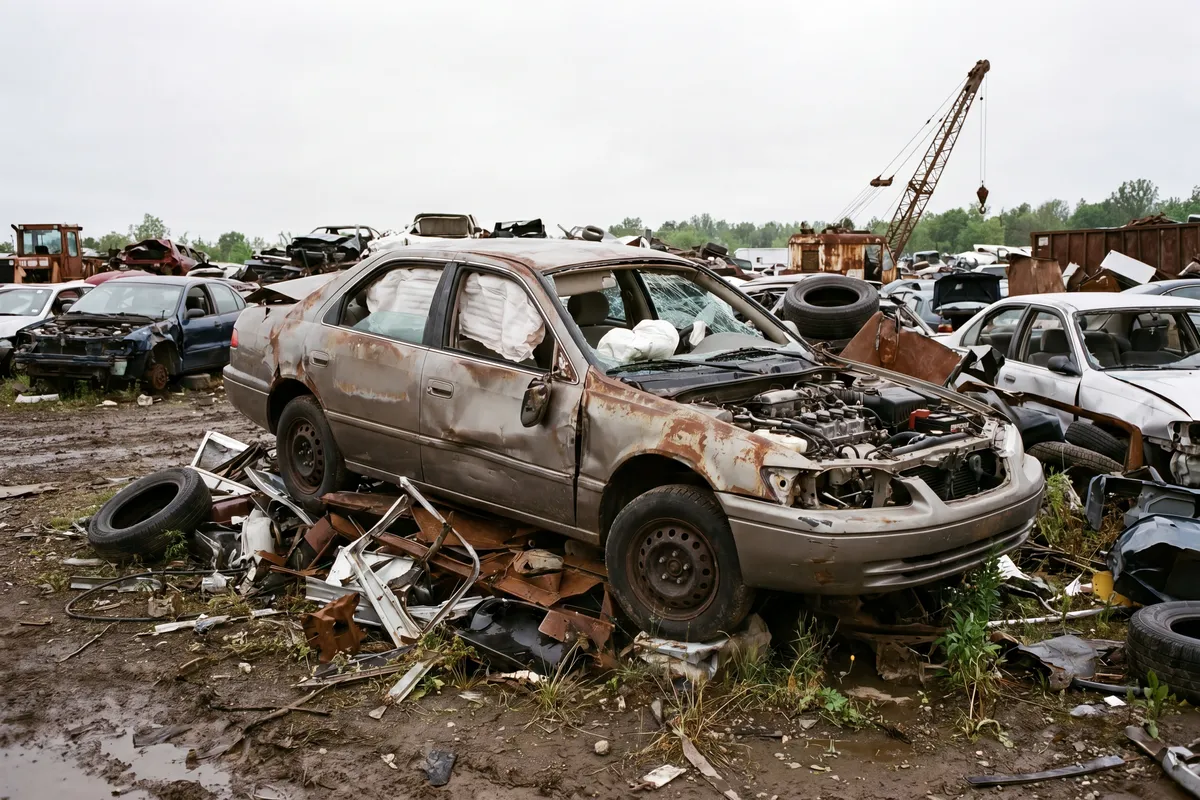

Drivers who made a first-party insurance claim on a vehicle that Tennessee Farmers Mutual Insurance Co. declared a total loss between Sept. 26, 2017, and April 7, 2026, may be eligible to claim a cash payment from a class action settlement.
Tennessee Farmers Mutual Insurance Co. agreed to pay $5.85 million to resolve a class action lawsuit alleging it breached its insurance policies by underpaying total loss claims. The lawsuit claims the company used an autosource report with a typical negotiation adjustment to reduce the actual cash value it paid to policyholders with totaled vehicles.
Who are the class members?
Class members must meet the following criteria:
- They made a first-party insurance claim on an automobile deemed a total loss under a policy Tennessee Farmers Mutual Insurance Co. issued.
- They submitted the claim between Sept. 26, 2017, and April 7, 2026.
- The claim involved an autosource report that applied a typical negotiation adjustment to at least one comparable vehicle to help determine its actual cash value at the time of loss.
Individuals who received a notice about this settlement are likely included in the class. The settlement administrator will use company records to identify eligible individuals.
How much can class members get?
Pro rata payment: The total settlement fund is $5,850,000. The settlement administrator will determine the amount each class member receives on a pro rata basis after deducting court-approved attorneys’ fees and expenses, a service award to the class representative and settlement administration costs.
No action needed to receive payment
Class members do not need to file a claim to receive payment. The settlement administrator will automatically send payments by check to the last known address on file unless a class member chooses to receive payment electronically.
Class members who need to update their address should contact the settlement administrator by filling out the online form, calling 833-447-6811 or writing to Weyant v. Tennessee Farmers Mutual Insurance, c/o Kroll Settlement Administration, PO Box 225391, New York, NY 10150-5391.
Class members who want to receive their payment electronically must submit an E-payment election online by Oct. 19, 2026;
Those who wish to exclude themselves from the settlement must mail a written request for exclusion to the settlement administrator by July 11, 2026. The request must include their full name, mailing address, a statement that they wish to be excluded and a handwritten or electronically imaged signature.
Payout options
- Paper check (default)
- Venmo
- Zelle
- PayPal
- Electronic funds transfer
$5.85 million settlement fund breakdown
The $5,850,000 settlement fund covers:
- Settlement administration costs: To be determined
- Attorneys’ fees: Up to $1,950,000
- Attorneys costs: To be determined
- Service award to class representative: Up to $5,000
- Payments to approved class members: The remainder of the fund
No portion of the settlement fund will revert to Tennessee Farmers Mutual Insurance Co. If there are any unclaimed or uncashed checks after the first distribution, the settlement administrator will redistribute the funds to class members who cashed their checks or selected electronic payment. If funds remain after a second distribution, the administrator will donate them to a court-approved nonprofit organization.
Important dates
- Exclusion deadline: July 11, 2026
- Final approval hearing: Aug. 14, 2026
- Electronic payment election deadline: Oct. 19, 2026
When is the Weyant v. Tennessee Farmers Mutual Insurance Co. payout date?
The settlement administrator will issue payments to class members approximately 90 days after the court resolves any appeals and grants final approval to the settlement.
Why is there a class action settlement?
The class action lawsuit claimed Tennessee Farmers Mutual Insurance Co. breached its insurance contracts by settling total loss vehicle claims for less than their actual cash value. The plaintiffs alleged the company underpaid these claims because it used an autosource report that applied a typical negotiation adjustment to comparable vehicles.
The company denies any wrongdoing or liability but agreed to settle to avoid the uncertainty and expense of continued litigation.



.webp)
.webp)
.webp)

.webp)
.webp)
.webp)
.webp)






.svg)