.png)
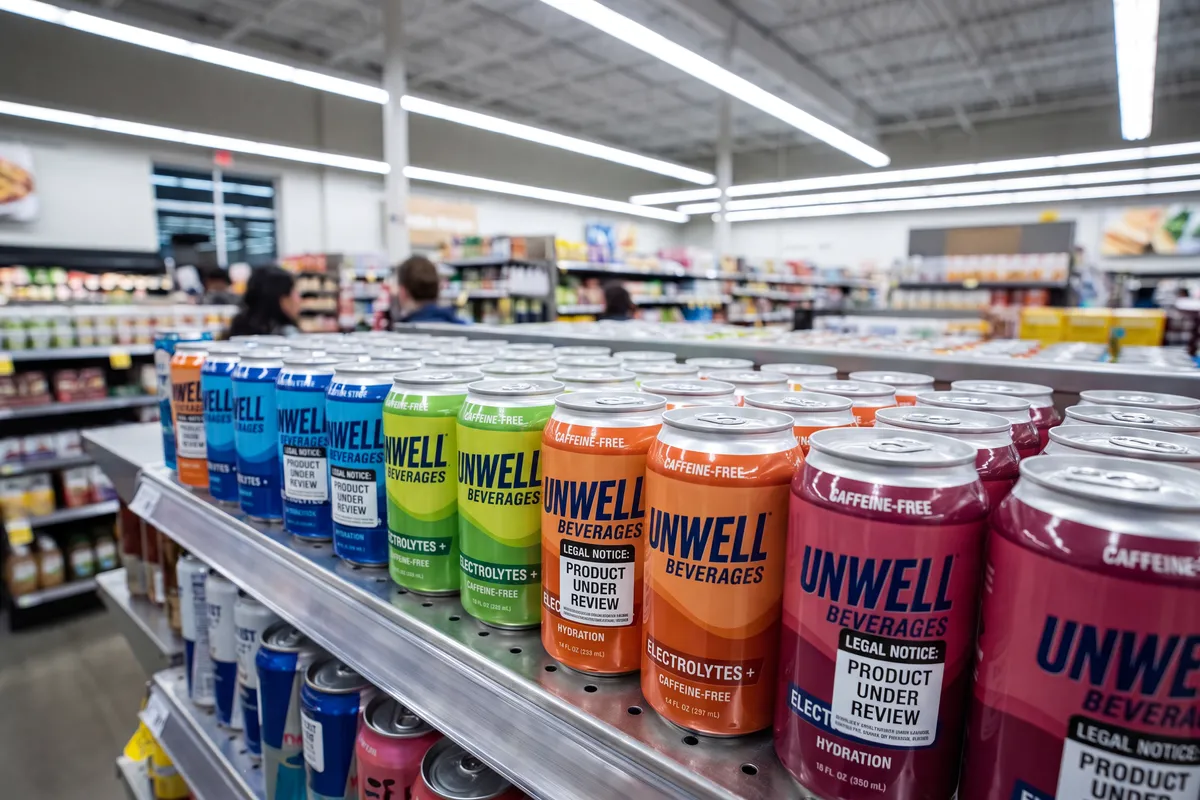

A California woman filed a class action lawsuit on July 22, 2026, claiming Unwell Products LLC, the beverage company podcaster Alex Cooper cofounded, falsely marketed its full line of drinks as free of artificial flavors.
Filed in the U.S. District Court for the Central District of California, the lawsuit alleges that two synthetic ingredients found in every Unwell Beverages product directly contradict the brand's claims of being artificial flavor-free.
Plaintiff Caitlin Darr says she purchased the brand's strawberry hydration focus drink from a Target store in or around June 2025 because she believed Unwell made the the drink without artificial flavors.
According to the complaint, she also bought strawberry hydration focus sticks and other products from the line in the prior two years.
Unwell Products drinks
Alex Cooper, the host of "Call Her Daddy," one of the most widely listened-to podcasts in the country, cofounded Unwell Products. The beverage brand operates as part of her broader Unwell Network media company. Major national retailers, including Target, Walmart, Amazon and Ralphs, sell the beverages. The product lineup includes hydration drinks, protein drinks, energy drinks and hydration sticks.
Unwell markets the drinks as containing no artificial flavors that contain "other natural flavors," according to the lawsuit. Cooper personally amplified these claims, narrating Instagram content and lending the credibility of her well-known personal brand to those product promises.
Alleged labeling violations
The proposed class action claims all Unwell Products beverages contain two artificial flavoring agents: citric acid and sodium citrate, directly contradicting the brand's "no artificial flavors" claims.
Citric acid provides the tart, sour taste in fruit-flavored drinks and foods. While its name implies an origin in citrus fruits, the lawsuit alleges that roughly 90% to 99% of all commercial citric acid is not derived from citrus. Instead, manufacturers produce it through industrial fermentation using a mutant strain of black mold known as aspergillus niger.
The complaint cites U.S. Department of Agriculture data to support its citric acid claims. As early as 1995, it stated that naturally derived citric acid, obtained by extracting it from citrus juice, is "no longer commercially available."
Additionally, the lawsuit claims sodium citrate is a chemically produced substance manufacturers create by neutralizing citric acid with sodium hydroxide or sodium carbonate. The USDA classifies sodium citrate as a nonagricultural synthetic substance under federal regulations at 7 C.F.R. § 205.605(b).
This class action is not the first to question citric acid. A class action filed against Gatorade maker PepsiCo in May 2026 claims that manufactured citric acid makes the brand's "no artificial flavors" labels false and misleading.
What this means for Unwell Beverages customers
Darr's complaint proposes two groups of potential class members. The first is a nationwide class covering all U.S. residents who purchased any Unwell Beverages product. The second is a California subclass limited to buyers within the state.
The case brings claims under the Class Action Fairness Act, alleging consumers paid more for Unwell Beverages products than they would have had they known the drinks contained artificial flavoring agents. The complaint cites consumer research stating 81% of shoppers say it is important to buy so-called "clean label" products. A separate study cited in the lawsuit found that 54% of U.S. consumers identify "no artificial ingredients" as one of the most important features of a clean label product.
Before filing the case, Darr reportedly took a legally required step under California law. The California Consumers Legal Remedies Act is a state statute that protects shoppers from unfair or deceptive business practices that requires a consumer to send the company a formal written demand and allow the company time to respond before filing a lawsuit. The lawsuit claims Darr sent that demand letter to Unwell Products LLC by certified mail on May 29, 2026.
According to the complaint, the company did not fully correct the alleged problem within the 30 days required under the law, and Darr filed the lawsuit the following month.
The proposed class action asks the court to award compensatory and actual damages, restitution, punitive damages, injunctive relief requiring the company to stop the allegedly false marketing, declaratory relief, attorneys' fees and costs, and pre- and post-judgment interest.

.webp)
.webp)
.webp)

.webp)
.webp)
.webp)
.webp)





.svg)