.png)

Ashish Hiranandani, Lori Romania and Reed Anderson filed a class action lawsuit against Axon Enterprise Inc. on Aug. 31, 2026, in the Superior Court of California, County of Alameda.
The complaint alleges the public safety technology company operates a searchable license plate database that police across the state search without publishing the usage and privacy policy California law requires.
Hiranandani says he received a traffic ticket in Fremont in February 2026. He claims Fremont police captured his plate and sent it to Fusus.
Romania and Anderson both said they drove through the Monterey Avenue and Fred Waring Drive intersection in Palm Deser, where Axon-operated cameras allegedly capture their plates for the same database.
Axon's Fusus system
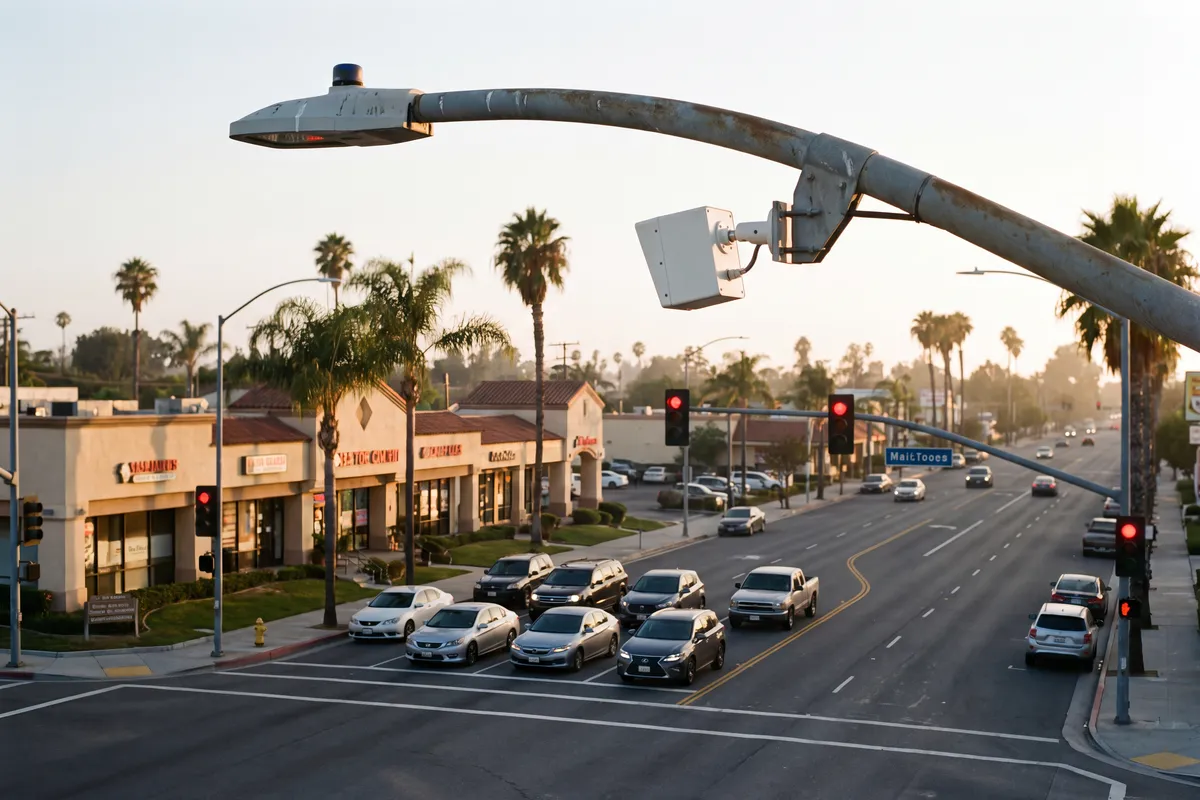
Automated license plate readers are cameras that photograph passing vehicles and record plate numbers along with the date, time and location of each scan. Axon, formerly Taser International, sells two of them: the Fleet 3, an in-car camera for patrol vehicles, and the Lightpost, a fixed camera mounted on streetlights.
Both cameras update their data to Fusus, the cloud platform Axon markets as a "real-time crime center in the cloud." Axon's product documentation describes a license plate recognition search screen that queries the data by plate number, state, make, model and capture time, returning date- and location-stamped images. The company has said the Fleet 3 alone has read more than 8.1 billion plates.
Axon publicity materials and agency statements say Fusus are located in San Jose, West Sacramento, Fremont, Beverly Hills, Oceanside, Orange County and Modesto. In October 2025, California Attorney General Rob Bonta sued the city of El Cajon, alleging it shared plate data with out-of-state law enforcement agencies through Fusus.
What California law requires
A 2015 amendment to the state's Information Practices Act, codified at Civil Code Section 1798.90.5, covers anyone running a searchable computerized database that turns camera images of plates into readable data. Operators must implement a usage and privacy policy naming the system's purpose, who may access it, the safeguards against misuse and the retention period then post it conspicuously online.
The lawsuit claims Axon must follow the act because it controls and operates Fusus. It alleges the company has not posted a private policy.
What the case means for California drivers
The proposed class covers all current California citizens whose license plate information the Fusus system collected. On a single count, the plaintiffs seek statutory damages of no less than $2,500 per violation, punitive damages, prejudgment interest, attorneys' fees and a court order directing Axon to post a compliant policy.
Axon has not yet responded to the complaint and has admitted no wrongdoing. There is no settlement, no claims process and no money available at this stage.

.webp)
.webp)
.webp)

.webp)
.webp)
.webp)
.webp)




.svg)