.png)
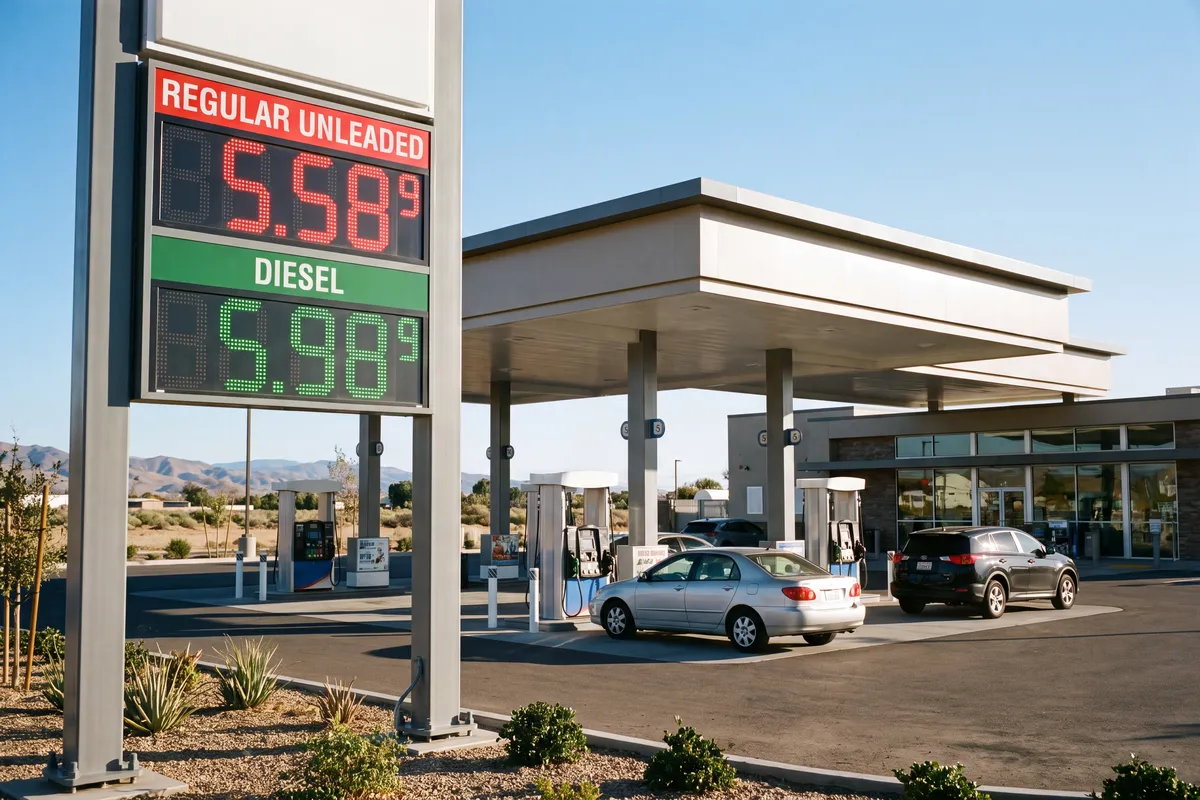

Three California residents filed a federal class action lawsuit on June 22, 2026, in the U.S. District Court for the Eastern District of California against Knowledge Support Systems, d/b/a Kalibrate, along with 14 of the largest gas station chains operating in the state.
Joel Casciani, Paola Hartman and Crystal Turnbough allege the chains used Kalibrate's AI-based pricing software to coordinate prices at the pump, calling the product the "central nervous system for a conspiracy to extinguish retail price competition among gas stations." The trio says they paid inflated prices at stations the defendants control.
What is Kalibrate Fuel Pricing?
Kalibrate, a New Jersey company headquartered in Livonia, Michigan, sells an algorithmic system, Kalibrate Fuel Pricing, that links a station's pumps and signs in to a central platform it calls the Pricing Cloud, the lawsuit claims. The company reportedly advertises that customers hand over as much as 90% of pricing decisions to the algorithm and that eight of the top 10 U.S. fuel retailers use it.
The complaint alleges the software does not help stations compete but instead coordinates higher prices across the market. It claims Kalibrate pulls data from more than 6,000 sources, including nonpublic cost and volume figures its own customers submit, then recommends prices that keep rivals from undercutting one another.
The plaintiffs points to Kalibrate's marketing, which urges customers to "avoid a race to the bottom" and a restoration feature that lets stations launch or join market-wide price hikes.
The lawsuit estimates a typical overcharge of roughly 6 cents per gallon at Kalibrate stations up to as much as 30 cents per gallon. With California drivers consuming about 13.4 billion gallons of gas a year, the suit notes that even a single cent more per gallon costs them $134 million annually.
The gas stations named in the suit
Marathon Petroleum's ARCO brand, with more than 1,000 stations statewide, has operated Kalibrate since at least 2020, according to the lawsuit. After the company shifted to a price-over-volume strategy, ARCO's retail margins jumped from roughly 37 cents to 67 cents per gallon between 2021 and 2022, the complaint claims. Albertsons, which runs 51 Safeway fuel stations, allegedly adopted the software in 2009, the longest tenure of any defendant.
Other defendants include:
- 7-Eleven and Speedway (more than 150 stations)
- EG America's Quik Stop (more than 90 stations)
- BP and its TravelCenters of America truck stops (16 stations)
- Walmart and Sam's Club (more than 25 stations)
- Circle K (more than 400 stations)
BP's TravelCenters unit reportedly told investors that Kalibrate lifted margins by more than $1 per gallon at certain sites. Across the markets the complaint examined, the named chains controlled between 26% and 41% of all stations.
What the case means for California drivers
The lawsuit brings two counts against Kalibrate:
- California Cartwright Act, the state's main antitrust law, which treats this kind of price-fixing as automatically illegal and lets courts award treble (triple) damages
- California Unfair Competition Law under its unlawful and unfair prongs
The proposed class covers anyone who bought gasoline at a defendant's California station that used Kalibrate Fuel Pricing from June 22, 2022, onward. The plaintiffs ask the court to certify the class, order compensatory and treble damages, force the companies to give up profits and permanently stop the conduct.
For now, there is no settlement, no claims process and no money to collect. The case is in an early stage in federal court in Sacramento, and the defendants have not yet answered the complaint.




.webp)
.webp)
.webp)

.webp)
.webp)
.webp)
.webp)




.svg)