.png)
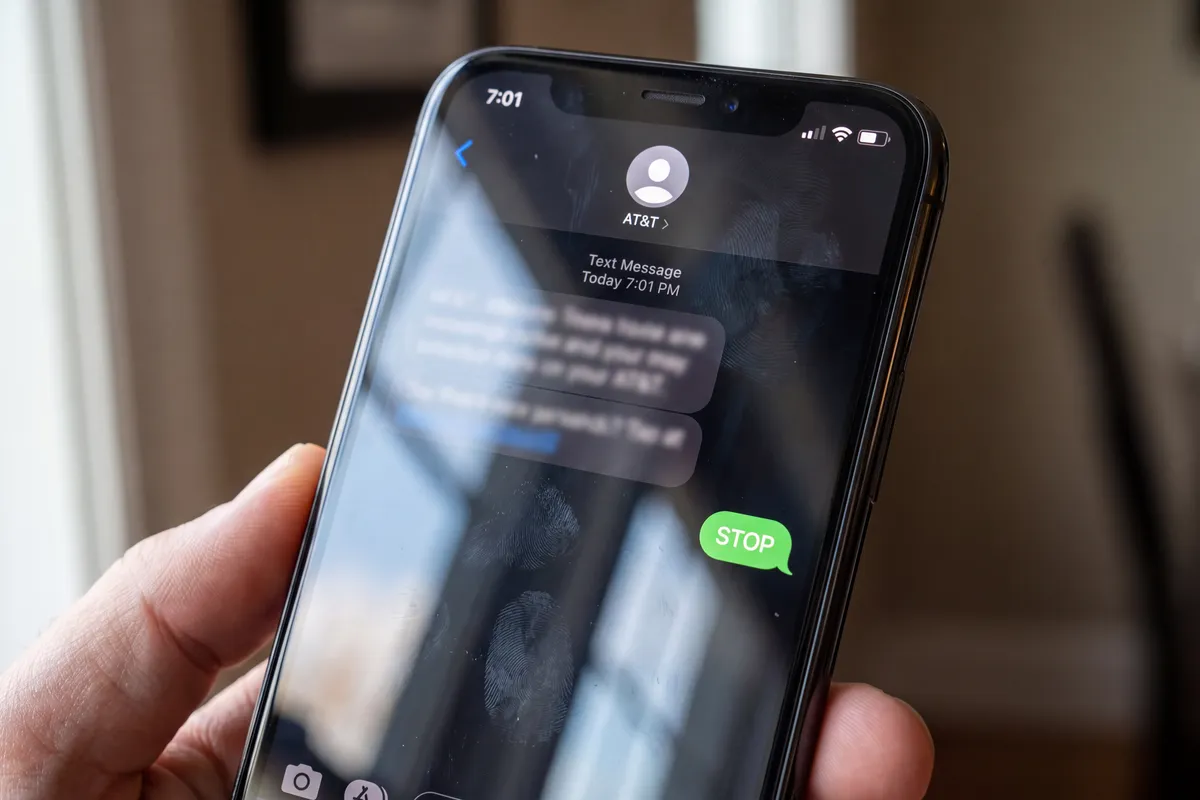

On Aug. 12, 2026, Los Angeles resident Alex Nercessian filed a class action lawsuit against AT&T Inc. in the U.S. District Court for the Central District of California. The complaint alleges AT&T violated the Telephone Consumer Protection Act by sending him promotional text messages for five months after he asked the company to stop.
The alleged messages
The texts reportedly started on Feb. 10, 2026, with a text that said, "Hi, it's AT&T" and a link to 5G upgrades available on Nercessian's existing plan, the lawsuit claims. That same message allegedly said he could "reply STOP to end mktg msgs."
Nercessian says he replied "STOP" the same day and received an automated response confirming the request stating, "You have opted out of AT&T marketing text messages. Allow up to 10 days for this to become effective. Please do not REPLY to this message." The proposed class action alleges he took that confirmation at face value and reasonably believed the marketing would end.
However, the lawsuit alleges the messages continued and Nercessian sent five more "STOP" requests over the months that followed. AT&T sent at least eight additional telemarketing texts after that first opt-out, each advertising products or services with a link to the company's website, the suit claims. Nercessian alleges the messages invaded his privacy, took up memory on his phone and disrupted his daily life.
What does the TCPA require?
Congress passed the Telephone Consumer Protection Act in 1991, and the Federal Communications Commission writes the rules enforcing it. Those rules bar a company from telemarketing to a residential subscriber unless it keeps an internal list of people who asked not to receive the messages, and the Ninth Circuit has held that texts count as calls. Nercessian reportedly listed his number on the National Do Not Call Registry on Feb. 3, 2019.
What this means for AT&T customers
The lawsuit proposes two nationwide classes covering people who received calls or texts from AT&T more than 10 days after revoking consent going back four years and people who received two or more telemarketing messages in a 12-month period while the National Do Not Call Registry listed their number.
The suit seeks $500 per violation and $1,500 for willful ones plus a court order forcing AT&T to honor opt-outs. The company has not responded in court. As of this writing, there is no settlement, no claims process and no money available.






.webp)
.webp)
.webp)

.webp)
.webp)
.webp)
.webp)






.svg)