.png)

On Sept. 25, 2026, Ken Sheldon and Shanaya Grant filed a class action lawsuit against Zoom Communications Inc. in the U.S. District Court for the Northern District of California.
The lawsuit alleges Zoom's AI meeting tools capture and share voiceprints from Illinois meeting participants without the consent the Illinois Biometric Information Privacy Act requires. BIPA protects biometric data, such as fingerprints, face scans and voiceprints. Before obtaining the data, a company must explain in writing why it is collecting the data and how long it will store it and then get the person's written permission.
The alleged voiceprints
Zoom reportedly launched AI Companion, its AI transcription and meeting summary tool, on Sept. 5, 2023. To tell speakers apart, the tool allegedly compares numeric profiles of each person's voice. The lawsuit claims those profiles are voiceprints.
The complaint cites a Zoom patent issued in February 2025 that describes extracting voiceprints and storing them alongside user accounts. Both plaintiffs say they spoke during meetings that used AI Companion or ZoomMate and that the company allegedly captured their voiceprints.
The plaintiffs' test
Zoom reportedly says its Scribe developer tool runs on the same technology as its AI features so the plaintiffs claim they used it to test how Zoom handles voices.
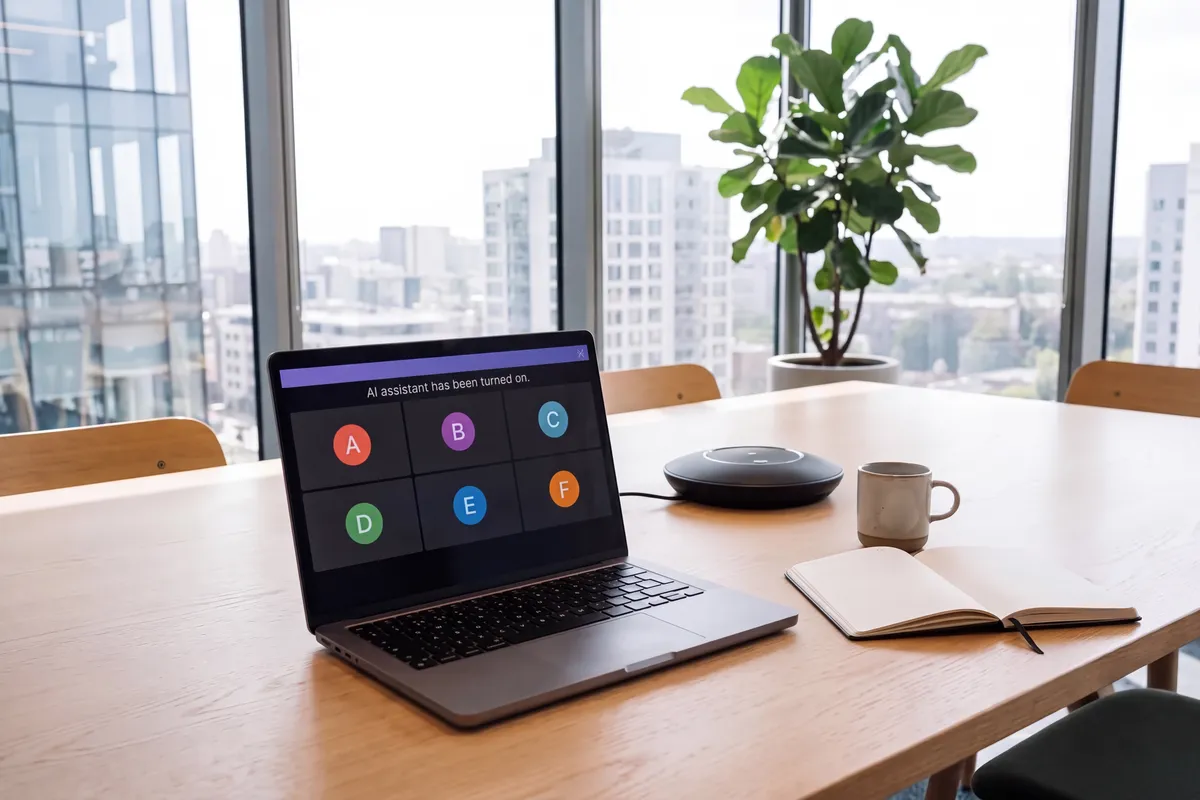
They recorded a meeting with AI Companion that included guests who joined without Zoom accounts, the lawsuit alleges. Those guests reportedly saw only a pop-up stating, "AI Companion has been turned on."
The team then allegedly fed the audio to Scribe along with short, unlabeled voice samples it recorded separately. Scribe matched each sample to the same person's speech throughout the recording based on voice alone, the filing contends.
Where the voice data allegedly goes
Zoom emails hosts AI summaries that match statements to named participants and sends speaker-labeled transcripts to Scribe customers, according to the lawsuit. ZoomMate, an AI add-on the company launched in June 2026, sends speaker data to outside platforms, such as Salesforce, and AI vendors, such as OpenAI, the proposed class action claims.
The company's annual reports cited BIPA and warned investors that failing to get consent could lead to class actions. Even so, the company allegedly left consent up to meeting hosts instead of asking participants directly.
The legal claims
The lawsuit brings three BIPA claims:
- Collecting without consent (Section 15(b)), for capturing voiceprints without notice or permission
- No retention policy (Section 15(a)), for not stating when Zoom deletes biometric data
- Sharing without consent (Section 15(d)), for passing biometric data to third parties
The plaintiffs seek $5,000 for each violation Zoom committed on purpose or recklessly or $1,000 for each careless one. The request includes attorneys' fees and an order requiring Zoom to follow the law and delete the voiceprints.
What the lawsuit means for Zoom users
The proposed class covers people who, while in Illinois, spoke at a Zoom session with AI Companion or ZoomMate running on or after Sept. 5, 2023, and whose voiceprints or related biometric data Zoom collected, kept or shared.
As of this writing, there is no settlement, no claims process and no money available.





.webp)
.webp)
.webp)

.webp)
.webp)
.webp)
.webp)





.svg)