.png)
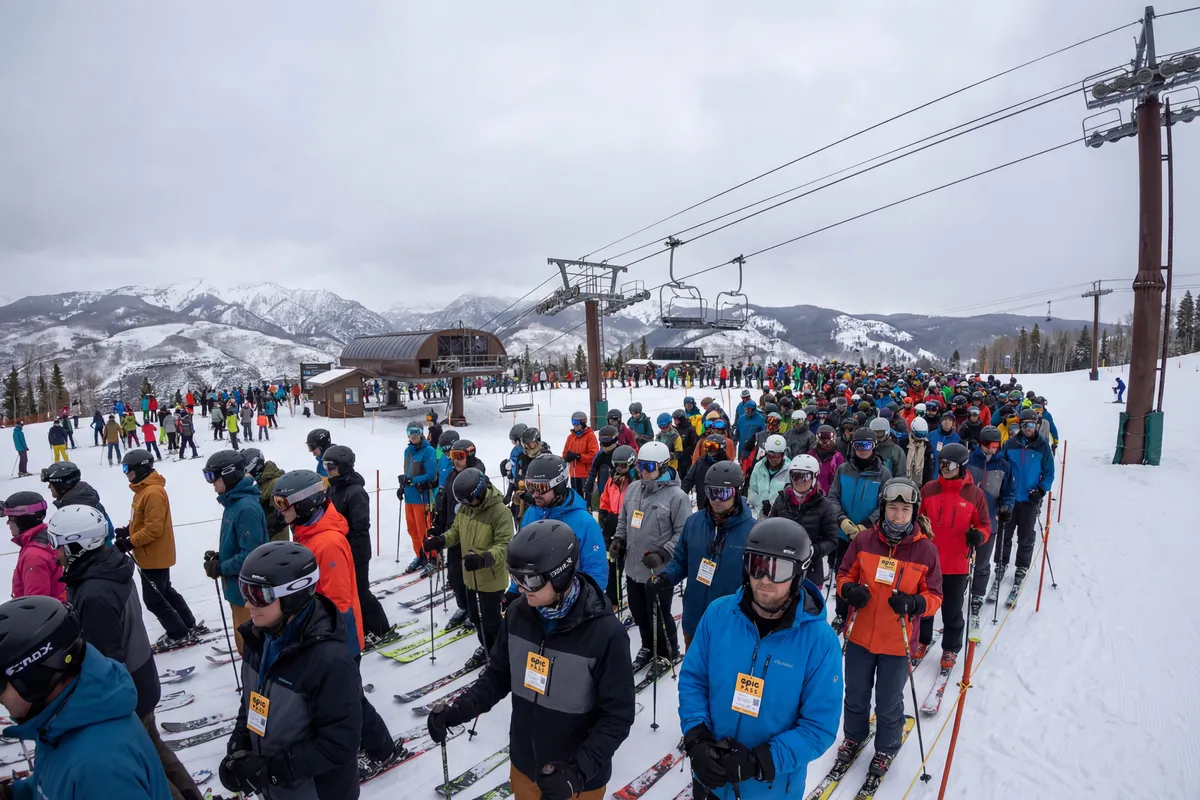

A new federal class action lawsuit filed on March 23, 2026, in the U.S. District Court for the District of Colorado by four ski pass holders accuses Vail Resorts and Alterra Mountain Company of using their market dominance to inflate ski pass prices and stifle competition in violation of federal and state antitrust laws.
According to the complaint, Vail Resorts owns or operates 42 ski areas while Alterra owns or operates 18, with both companies maintaining contractual access to dozens more. Together, their Mega Passes cover approximately 93% of all ski mountains classified as "Extra-Large" by the National Ski Areas Association.
The lawsuit alleges that through decades of acquisitions and contractual partnerships, the two companies consolidated control over virtually every major "Destination Ski Resort" in North America. That concentration of market power, the complaint argues, gave each defendant the ability to force consumers into all-or-nothing bundled pass arrangements while systematically cutting independent regional ski areas out of meaningful competition.
Do the ski passes inflate prices?
The complaint alleges a "tying" arrangement, that each defendant used its dominant position in the market for access to major Destination Ski Resorts to force consumers into also paying for access to smaller "Regional Ski Areas" through all-or-nothing Mega Pass bundles. The plaintiffs argue this violates Section 1 of the Sherman Antitrust Act, the federal law that prohibits agreements and combinations that unreasonably restrain trade.
In a tying arrangement, a seller with market power in one product forces buyers to also purchase a second, separate product. Here, the complaint contends, access to the most popular destination mountains is the dominant product, and access to regional mountains is the bundled addition.
Consumers who simply want to ski at a major resort, the lawsuit alleges, are forced to accept access to regional mountains they may not want as part of the only realistic purchasing option available to them.
To make the Mega Passes appear to be a bargain by comparison, the complaint alleges, both companies deliberately set single-day lift ticket prices at artificially high levels. For the 2025-2026 ski season, a walk-up ticket at Vail Mountain cost as much as $356. A single-day ticket at Steamboat Springs reached $339. The complaint describes these as "supracompetitive" prices, meaning they were elevated beyond what a normally competitive market would support.
The lawsuit points to public statements by Vail Resorts Chief Executive Officer Rob Katz as direct evidence of this strategy. According to the complaint, Katz told The New York Times that lift ticket prices were "intentionally aggressive" in order to push customers toward purchasing Epic Passes. In a separate interview cited in the complaint, Katz reportedly acknowledged to The Wall Street Journal that Vail's pricing approach raised lift ticket prices across the entire ski industry.
The Mega Passes themselves have also become significantly more expensive in recent years. The Epic Pass rose from $793 in the 2021-2022 ski season to $1,089 in 2025-2026, a 37% increase. The Ikon Pass climbed from $999 to $1,399 over the same period, a 40% rise. Compounding the financial pressure, both defendants stop selling their passes before the peak ski season begins, the complaint contends, requiring consumers to commit their money months in advance.
The long-term trajectory of lift ticket prices has also far outpaced inflation, according to the lawsuit. A lift ticket at Vail-Beaver Creek cost approximately $55 in 1999. By 2025, that same ticket cost $329. Had prices merely kept pace with general inflation over those years, the complaint states, the ticket would cost only about $115, meaning actual prices grew to nearly three times what inflation alone would predict.
Have independent ski areas been edged out?
Once a consumer purchases a Mega Pass, the complaint argues, financial lock-in effects take hold. Because skiing at any resort within the pass network costs nothing extra once the pass is already purchased, consumers have little economic incentive to also buy lift tickets at independent mountains.
This dynamic, the plaintiffs contend, effectively forecloses independent ski areas from competing for the business of pass holders. The scale of the effect is illustrated by fiscal year 2025 results at Vail: Epic Pass products generated 65% of the company's total lift revenue and accounted for 75% of its total skier visits.
The lawsuit uses the story of Arapahoe Basin as a case study in how the Mega Pass system reshapes competition. According to the lawsuit, Arapahoe Basin left the Epic Pass network in 2019 because unlimited bundled access was causing severe overcrowding at the resort. The mountain subsequently joined the Ikon Pass on limited terms.
Then, in November 2024, Alterra Mountain Company finalized its acquisition of Arapahoe Basin for $105 million, drawing the formerly independent resort fully into one of the two dominant pass networks. The deal closed after a review by the U.S. Department of Justice, according to reporting by the Colorado Sun, reflecting growing regulatory scrutiny of consolidation in the ski industry.
Independent resorts have been left to compete for a diminishing share of the market. The complaint cites Magic Mountain and Smugglers' Notch, both in Vermont, as examples of independent ski areas that must deeply discount their lift tickets and actively promote the fact that they have fewer crowds in order to attract visitors. Despite those strategies, the lawsuit argues, they remain structurally disadvantaged because the Mega Pass lock-in keeps the vast majority of consumers within the defendants' resort networks.
What does this mean for skiers?
The proposed class includes all U.S. residents who purchased a Mega Pass or a lift ticket at an affiliated ski area directly from Vail Resorts or Alterra Mountain Company on or after March 23, 2022. The plaintiffs estimate the class could number in the millions of people.
The complaint asserts five counts:
- Counts one and two: allege violations of Section 1 of the Sherman Antitrust Act for unlawful bundling against Vail Resorts and Alterra, respectively.
- Counts three and four: allege separate violations of the Colorado Antitrust Act of 2023, a state law that mirrors federal antitrust protections, against each company.
- Count five: alleges unjust enrichment against both defendants, claiming they improperly profited at consumers' expense.
As remedies, the plaintiffs seek treble damages, a legal term for three times the actual financial harm proven at trial, which is a specific remedy available under federal antitrust law intended to deter anticompetitive behavior.
They also seek injunctive relief to halt the alleged conduct from continuing, disgorgement of the defendants' profits and payment of attorneys' fees.
Representatives of Vail Resorts and Alterra Mountain Company had not publicly commented on the lawsuit at the time of publication.






.webp)
.webp)
.webp)

.webp)
.webp)
.webp)
.webp)






.svg)