.png)
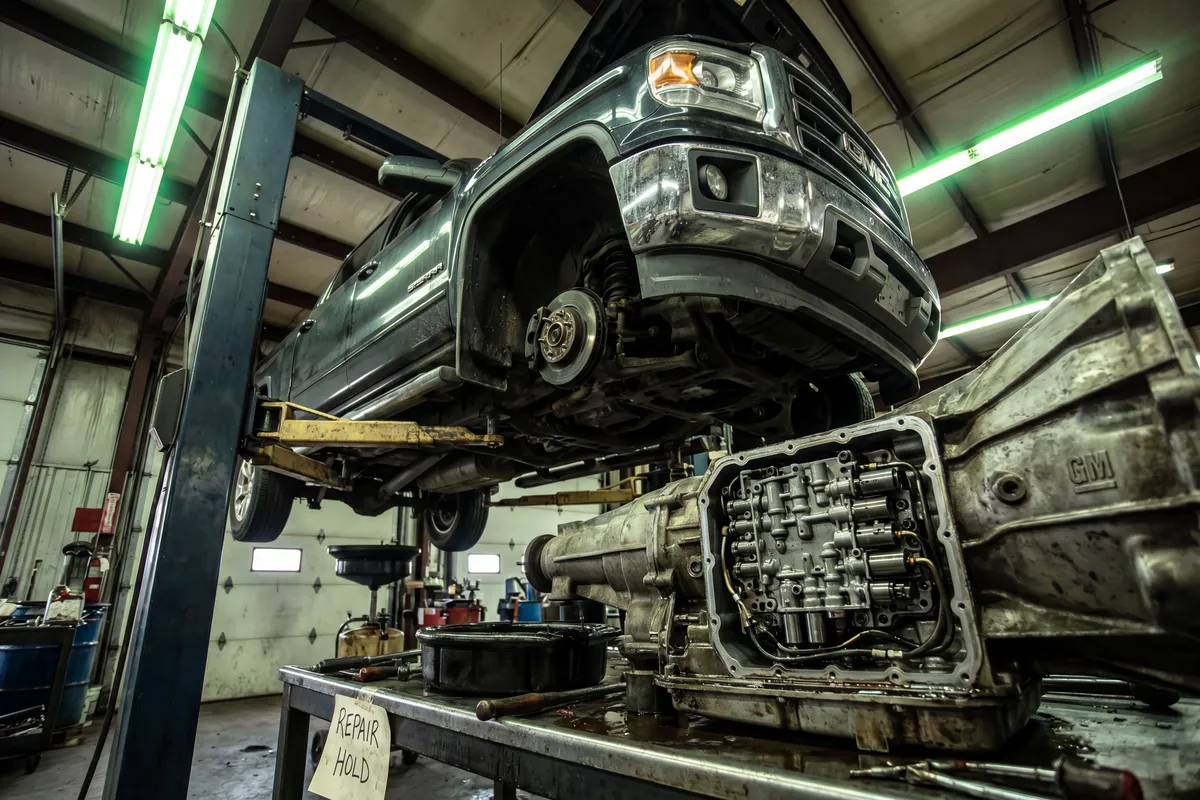

On April 13, 2026, Napa Valley G Experience LLC, Juan Morales and Ruben Smith filed a class action lawsuit against General Motors LLC in the U.S. District Court for the Northern District of California. The lawsuit alleged the automaker sold trucks and SUVs equipped with defective 10-speed automatic transmissions that can shake, hesitate and lock up their wheels without warning.
The proposed class includes California consumers who purchased or leased certain GMC Sierra, Chevrolet Suburban and GMC Yukon vehicles with the affected transmissions.
Who are the plaintiffs?
Napa Valley G Experience LLC alleged it purchased a 2022 Chevrolet Suburban that exhibited shaking, shuddering and harsh mechanical noises.
California resident Juan Morales claimed he purchased a 2021 GMC Sierra 1500 Crew Cab Denali that required a full transmission replacement after multiple dealer visits failed to resolve harsh, erratic shifting.
Florida resident Ruben Smith said he purchased a 2018 GMC Yukon that experienced the widest range of symptoms, including harsh shifting, hesitation, delayed responses, shuddering, clunking, whining, lunging and surging. The class action claims GM's authorized dealers failed to fix his vehicle.
The transmissions at the center of the case
GM's 10L series includes the 10L60, 10L80, 10L90 and 10L1000, the last of which carries the Allison brand name. The complaint states GM codeveloped the 10-speed platform with Ford beginning in 2013, introduced it in select 2017 and 2018 model year vehicles then expanded it broadly across its truck and SUV lineup. GM reportedly marketed the transmissions as breakthrough technology delivering smooth shifting, high efficiency and high performance.
What GM allegedly knew
The complaint identifies three main failure categories: harsh noises and sensations during shifts, unreliable acceleration and deceleration, and momentary wheel lockup on certain downshifts. The class action lawsuit attributes those symptoms to instability in hydraulic pressure control and clutch timing, pointing to valve body wear, torque converter contamination and inadequate software calibration.
The plaintiffs contend GM had multiple warning signs before vehicles reached consumers and claim Ford deployed the same codeveloped transmission in its 2017 F-150 and faced at least six class action lawsuits over shifting and drivability problems by July 2019. Meanwhile, starting as early as 2016, GM allegedly ran internal programs requiring dealers to route transmission repairs through it directly.
Recalls fall short, plaintiffs say
GM issued two safety recalls tied to the 10-speed, both addressing wheel lockup and offering only a software patch that limits the transmission to fifth gear when the system detects excessive valve body wear, a condition mechanics call "limp home" mode. The recalls reportedly covered:
- Oct. 24, 2024 (NHTSA Recall 24V-797): 461,839 diesel-powered vehicles with the 10L1000 transmission, covering model years 2020 through 2022. GM acknowledged 1,888 field reports of lockup, 11 incidents in which vehicles veered off roadways and three minor injuries.
- March 6, 2025 (NHTSA Recall 25V-148): 90,081 gasoline-powered vehicles with the 10L80 transmission, covering the 2019-2022 Cadillac CT4, CT5 and CT6 and the Chevrolet Camaro.
The complaint claims neither recall constitutes a genuine repair and that both are underinclusive, pointing to continued failures in 2023 and 2024 model year Escalades, Suburbans, Sierras and Silverados, some with as few as 1,100 miles on the odometer.
The aftermarket fix and GM's response
Aftermarket supplier reportedly Next Gen Drivetrain identified crosslinks in the valve body as the root cause of the wheel lockup, developed replacement kits and warned GM about what it called an "extreme safety problem." The plaintiffs claim GM initially refused to purchase the parts though roughly 60 to 70 GM dealers allegedly independently opened wholesale accounts with Next Gen and bought between 400 and 600 kits. In July 2025, the lawsuit claims a senior GM official contacted Next Gen about buying parts.
GM released a "Gen 3" valve body in late 2025, described in Service Bulletin 25-NA-334. Despite the redesign, early field reports show the Gen 3 units continue to fail, the complaint alleges.
What the lawsuit seeks
The nine-count complaint asserts claims under the California Unfair Competition Law, the Consumers Legal Remedies Act, the False Advertising Law and the Song-Beverly Consumer Warranty Act, which is California's primary lemon law. It brings additional claims under the federal Magnuson-Moss Warranty Act and for unjust enrichment.
Plaintiffs seek class certification, compensatory and statutory damages, restitution and injunctive relief for California consumers who purchased or leased affected GMC Sierra trucks from model year 2019 forward, Chevrolet Suburbans from model year 2019 forward and GMC Yukons from model year 2018 forward. The complaint states the total amount in controversy exceeds $5 million, the threshold for federal jurisdiction under the Class Action Fairness Act.
There is no settlement, no claims process and no money available at this time.






.webp)
.webp)
.webp)

.webp)
.webp)
.webp)
.webp)


.svg)