.png)
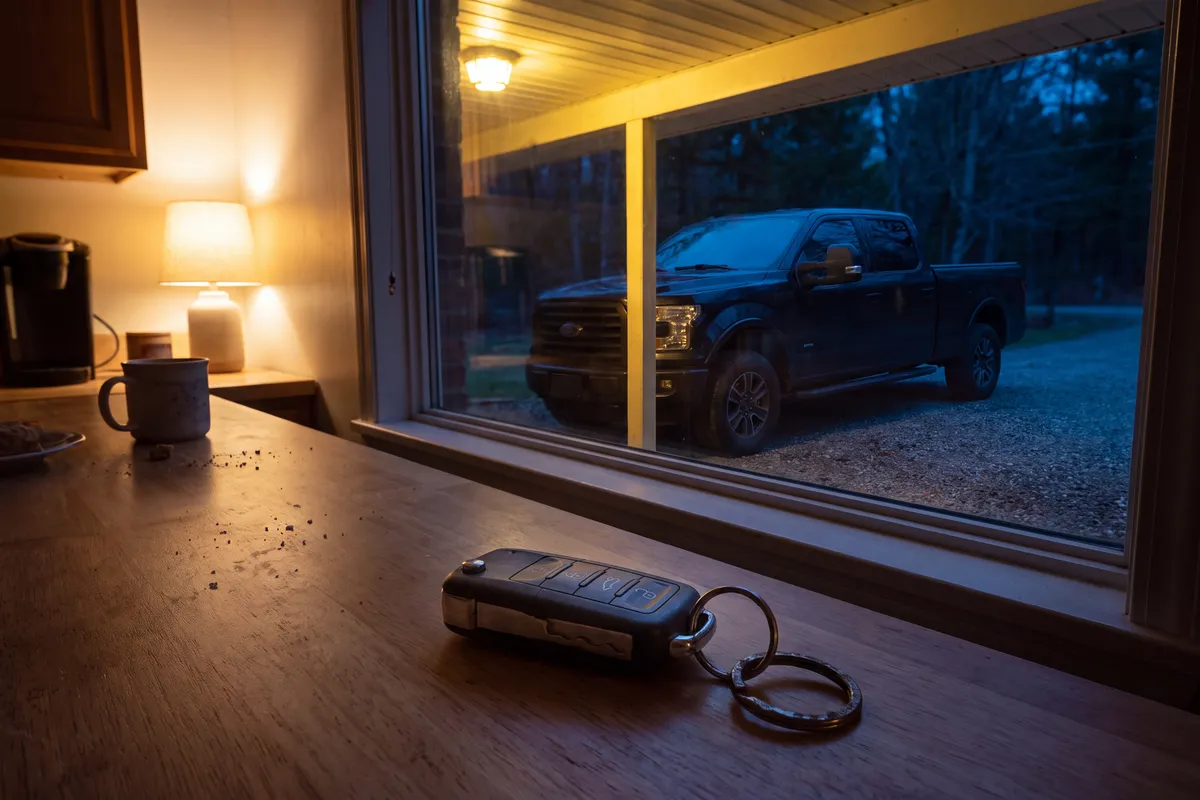

William Pelletreau filed a class action lawsuit against Ford Motor Co. on Sept. 9, 2026, in the U.S. District Court for the Eastern District of Michigan.
The complaint claims Ford sells vehicles with a passive keyless entry system that thieves defeat with cheap electronics, and that the company has known about the weakness since 2011 without telling buyers.
A theft claim without a theft
Pelletreau says he bought a 2023 Ford F-150 and still owns it. He paid more for the truck, and more to insure it, than he would have had Ford disclosed how easily thieves take them, the class action alleges, and the vulnerability cut its resale value. Theft data in the filing shows the F-150 topped the country's most-stolen list in 2023, and thieves took 12,952 of them the following year.
Ford puts the same system, marketed as the Intelligent Access Key or Smart Key, in the Bronco, Explorer, Mustang and Escape, among other models.
How thieves allegedly get in
The theft involves the On-Board Diagnostic port under the dash, where thieves code a new key and pull the factory tracker from its standard spot, the complaint alleges.
The filing describes multiple ways car thieves break into the vulnerable vehicles:
- Relay theft, an antenna amplifying the fob's signal through the walls of a house
- Electronic software entry, a laptop and store-bought software opening the doors
- Key cloning, a VIN buying a coded duplicate, or an Autel scanner making a key in 60 seconds
Federal prosecutors in Washington charged six people in April 2026 over a ring that took at least 20 cars by reprogramming them to accept blank fobs, according to the filing.
What the class action says Ford knew
Researchers at the University of California and the University of Washington showed in 2011 that thieves could exploit keyless systems, and Sen. Edward Markey later sent letters to 17 manufacturers, Ford among them, asking what they planned to do.
Ford's own programs show it knows, the complaint contends. The company reimburses select F-Series owners up to $2,500 for insurance deductibles on stolen trucks and sells an Advanced Security Package for $7.99 a month that lets owners disable a vehicle from a phone.
Off-the-shelf fixes and the warranty catch
The suit names two off-the-shelf fixes, aftermarket stealth CANbus immobilizers at under $800 installed and OBD port locks at under $150, neither of which Ford builds into its vehicles or mentions to owners.
Ford reportedly tells owners that adding equipment like that could void warranty coverage, which allows vehicles to remain vulnerable to theft.
The legal claims
Pelletreau brings a number of claims, most of them warranty and consumer protection theories:
- Magnuson-Moss Warranty Act, the federal law governing written warranties on consumer products
- Breach of express and implied warranty, under Michigan law and the laws of other states
- Michigan Consumer Protection Act and parallel consumer protection statutes in other states
- Breach of the implied covenant of good faith and fair dealing, plus common law fraud and unjust enrichment
The complaint asks the court to triple any damages it awards, to make Ford set aside its profits for class members to claim, to award attorneys' fees, to bar the practice going forward and to order Ford to tell current owners about the vulnerability and what they can do about it.
What the case means for Ford owners
The proposed damages class covers anyone who bought or leased a Ford with passive keyless entry from an authorized dealer since Jan. 1, 2015, and a second class of current owners and lessees seeks only the injunction.
As of this writing, there is no settlement, no claims process and no money available.





.webp)
.webp)
.webp)

.webp)
.webp)
.webp)
.webp)




.svg)